
In July 2026, bunker supplier Peninsula estimated that a typical Suezmax tanker diverted through the Suez Canal and west across the Mediterranean could need about 1,500 extra tonnes of fuel, costing roughly $800,000. That voyage also crosses a regulatory boundary. Since 1 May 2025, MARPOL has set a 0.10% sulphur limit for fuel used in the Mediterranean Emission Control Area, compared with 0.50% outside emission control areas. A diversion can therefore change the fuel plan as well as the route.
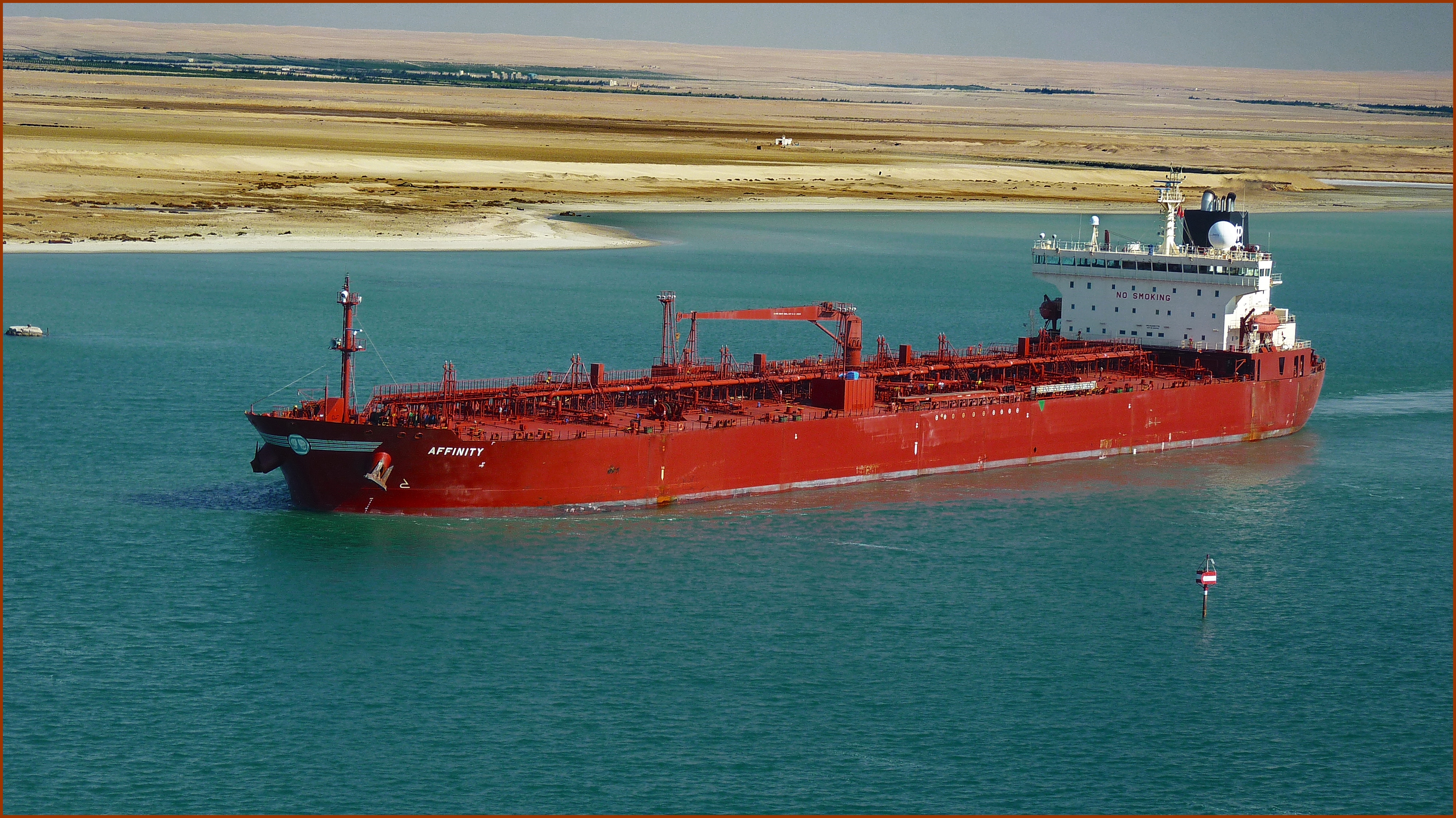 Oil products tanker Affinity transiting the Suez Canal. Photo by Panoramio user 2433337, via Wikimedia Commons, CC BY SA 3.0." loading="lazy" />
The pressure rises when Red Sea security disruption pushes ships onto longer paths at short notice. Peninsula said rerouted vessels could place more demand on Port Said, Malta, Gibraltar, Algeciras, and other bunker hubs. A ship that planned for a different exit must now confirm where compliant fuel is available, how much it must load, and when each tank will feed the engines. The calculation changes again if speed, weather, waiting time, or a late port call shifts consumption.
When the bunker plan sits in email, soundings in a log, and delivery certificates in another system, the shore team cannot see one defensible remaining on board figure by grade. A late route change then forces staff to reconcile planned consumption with manual measurements and old delivery notes. If the balance is wrong, the vessel may reach the changeover point with too little compliant fuel or carry more expensive fuel than the revised voyage requires. The same gap weakens the record if inspectors question what was burned and when.
An effective response keeps quantity, grade, delivery evidence, and actual consumption in one voyage record. It recalculates remaining fuel as route, speed, and arrival time change, while preserving each tank measurement and bunker certificate. The operator can see the margin before the ship commits to a bunker port or crosses into the control area. The changeover entry then rests on measured inventory rather than a spreadsheet assembled after arrival.
Strix brings consumption tracking, sounding records, and bunkering certification into that record. It shows how much of each grade remains on board, compares measured burn with the voyage plan, and keeps the bunker delivery evidence beside the quantity received. For a rerouted Suezmax, that gives the shore team a current basis for choosing Port Said or another supply point and checking that 0.10% sulphur fuel will cover the Mediterranean leg. Operations and compliance teams can then examine the same measured fuel position.
Operators that build this record before the next diversion can change route, stem, and fuel grade while suppliers and sailing time remain available. Those that retrofit it under pressure will still have the same tanks and certificates, but no reliable picture of how they fit the revised voyage. Strix cannot make compliant fuel appear at a crowded port. It can show the shortfall before the vessel reaches the point where every remedy costs time.