
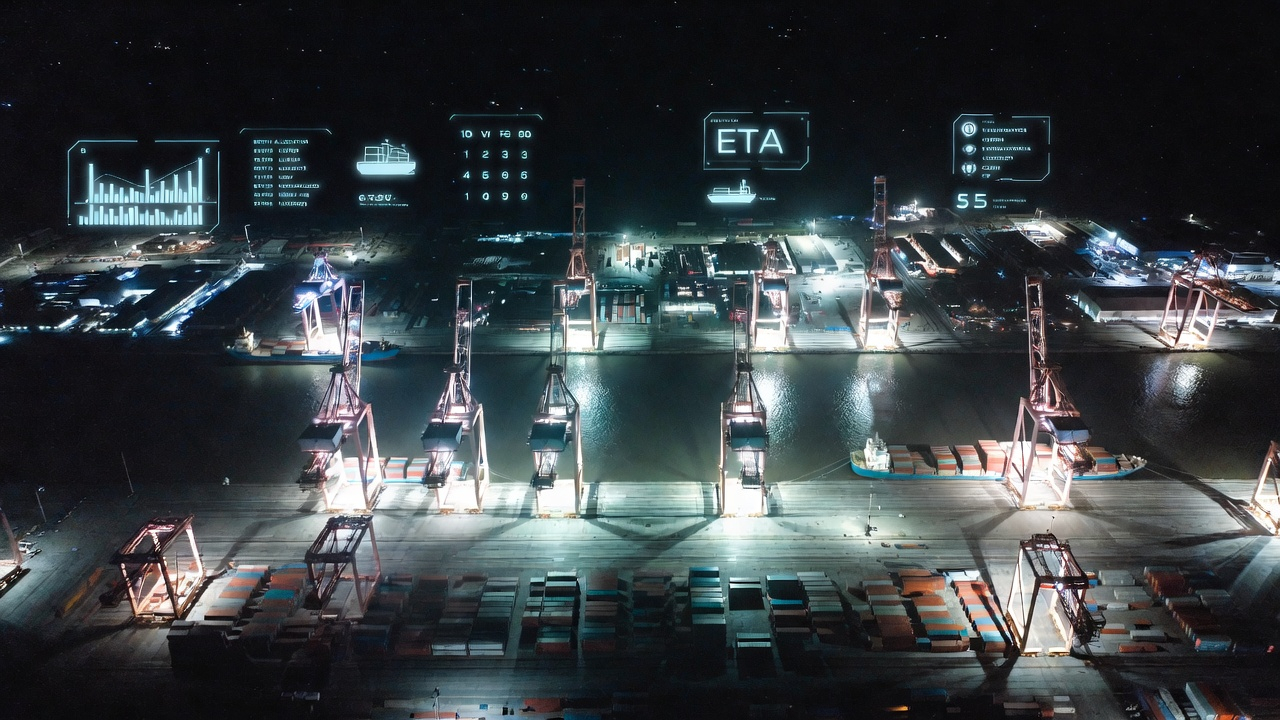
The smart berth allocation algorithm market hit $1 billion in 2025 and is growing at 14.5% annually. The global port operations AI market, valued at $1.8 billion in 2024, is projected to reach $7.2 billion by 2033. Those are not speculative numbers about a future that has not arrived. They describe capital that is already moving into operational infrastructure at ports that have decided manual coordination is no longer viable.
The question is not whether ports will digitize. It is which ports will do it before the competitive gap becomes structural.
What Manual Port Coordination Actually Costs
The cost of the old model is specific and measurable. Container ships now use 14% less fuel by optimizing arrival times to coincide with berth availability rather than waiting at anchor. The Port of Rotterdam cut vessel scheduling time by 4 hours per ship and reduced carbon emissions by 28 tonnes per ship through digital twin simulation. Ports using AI-driven systems report throughput improvements of 10 to 20%.
These are not edge cases. They are the baseline outcomes of replacing reactive, manual coordination with systems that can hold the full operational picture simultaneously and act on it faster than any human team.
What manual coordination actually costs is the gap between the actual arrival time of a vessel and the moment the port is ready for it. Every hour a vessel spends at anchor waiting for a berth is dead time charged at operating rates that range from thousands to tens of thousands of dollars per day. Multiply that across a port handling hundreds of vessel calls per month and the waste is significant, and measurable, and avoidable.
Berth Optimization Is the Highest-Leverage Application
Berth management sits at the intersection of every variable in port operations: vessel dimensions, cargo type, crane availability, tide constraints, tug schedules, labor shifts, customs clearance timelines. Getting it right requires holding all of those variables in a single model and updating that model continuously as conditions change.
AI-driven berth scheduling automates the assignment of vessels to berths by processing all of these inputs simultaneously. When a vessel's ETA shifts, the system recalculates the downstream impact on crane allocation, labor scheduling, and landside logistics and generates a revised plan without requiring a dispatcher to manually work through the cascade.
65% of logistics providers now prefer AI-driven predictive analytics over traditional operational planning methods for exactly this reason. The cognitive load of manually tracking interdependencies across a large port operation exceeds what any planning team can sustain at the required update frequency. Automation does not replace the judgment of experienced operators. It gives them a continuously updated operational picture so their judgment is applied to real situations rather than reconstructed from incomplete information.
The Port Community Problem
Berth optimization within a terminal is relatively tractable. The harder problem is coordination across the port community, the network of shipping lines, terminal operators, pilots, tugs, customs authorities, truck fleets, and rail operators who each have their own systems, their own schedules, and their own information.
When those parties operate on different data, with different update frequencies and no shared picture, the coordination failures compound. A vessel arrives early; the berth is not ready; the crane crew has been reallocated; the trucks are scheduled for a window that no longer aligns. Each of these failures is individually recoverable. Together they create the kind of operational chaos that makes port managers look at a busy day and see pure waste.
The ports generating the best performance metrics in 2026 have moved toward a port community system: a shared operational layer that gives every stakeholder a common view of vessel positions, berth status, equipment availability, and cargo readiness. When the picture is shared, coordination becomes a matter of acting on information rather than negotiating over it.
What Connectivity Makes Possible
Advanced connectivity, including private 5G networks deployed at major terminals, is enabling a class of automation that was not feasible with older infrastructure. Autonomous vehicles moving containers between the vessel and the yard. IoT sensors on equipment providing real-time health data before failures occur. Real-time container tracking that removes the need for manual inventory checks at every handoff point.
These are not future capabilities. They are operational at leading terminals today, and the competitive implications for ports that have not made the infrastructure investment are beginning to show in performance benchmarks and customer contracts.
The trajectory is clear. Port operations are moving from a coordination problem solved by experienced humans with phones and spreadsheets to an optimization problem solved by integrated intelligence platforms with human oversight. The transition is already underway. The question for every port is where in that transition they want to be caught.