
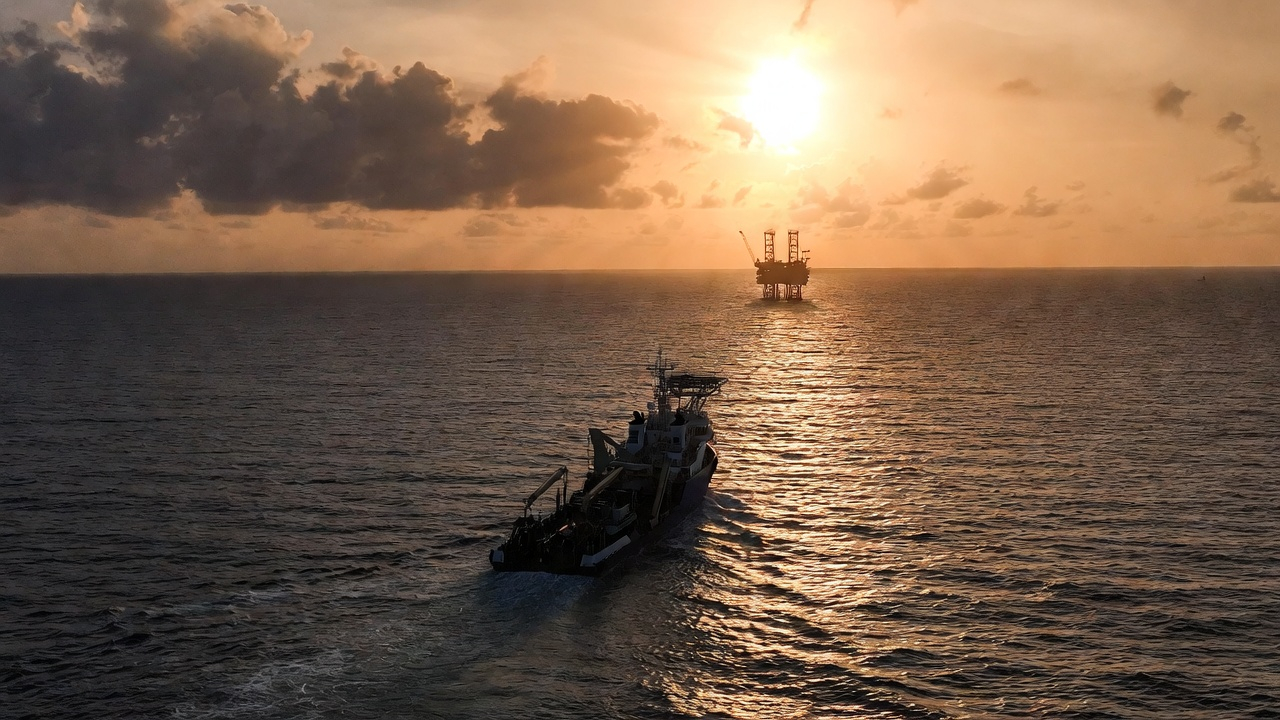
The global offshore supply vessel market reached $28.3 billion in 2025 and is estimated at $30.4 billion in 2026. Fleet-wide marketed utilization averaged 76% in 2025, with PSVs at 78% and AHTS vessels closer to 80%. Those numbers represent a market that is tightening — structural fleet constraints and rising offshore E&P spending are pushing utilization toward a ceiling.
The operators approaching that ceiling are not doing it with more vessels. They are doing it with better intelligence about the vessels they already have.
What Manual Scheduling Actually Costs
A single offshore supply vessel operating in the North Sea or Gulf of Mexico costs between $15,000 and $40,000 per day to run. At those rates, an hour of unproductive waiting — at anchor, at the dock, holding position offshore while the platform is not ready — is not a rounding error. It is a direct charge against the day's operational budget with nothing to show for it.
The Opsealog 2025 Global OSV Market Report tracks "idle time vs. productive use" as a core performance benchmark across the sector precisely because this gap is where operational efficiency is won or lost. For operators managing fleets of 10 to 20 vessels servicing multiple installations simultaneously, closing that gap by even a few percentage points represents significant annual savings.
The problem with manual scheduling is structural. Dispatchers working from static voyage plans, updated weekly or daily at best, are always reacting to a situation that has already changed. The vessel is two hours behind schedule. The weather window has shifted. A platform request came in that wasn't on the original plan. Each deviation requires a phone call, a system lookup, a manual update. By the time the picture is reconciled, it is already out of date.
What Changes When the Picture Is Live
Fleet intelligence platforms give shore-based teams continuous visibility into vessel position, cargo status, crew condition, and equipment health — updated in real time rather than at the end of a voyage. When that live picture is connected to other operational data, the impact compounds.
Consider the sequence: a supply vessel is running four hours behind schedule due to weather. A live platform inventory feed shows the cargo it is carrying is not time-critical for another 18 hours. A separate vessel, already en route to a nearby platform, has capacity and a faster route. The system flags the opportunity automatically — the dispatcher makes one call instead of three and avoids a costly hold at anchor.
This is not a hypothetical. AI and digital platforms operating across global fleets in 2025 helped crews reduce significant safety events by 58% and saved over $82,000 in fuel per vessel per year, according to Orca AI's 2025 fleet operations review. Over 70% of companies investing in maritime digitalization identify cost reduction as the primary driver, with predictive scheduling and voyage optimization at the top of the returns list.
Predictive Maintenance as a Logistics Variable
Unplanned downtime is the offshore logistics variable that manual scheduling cannot anticipate at all. When a vessel goes off-charter for an emergency repair, every voyage plan built around it has to be reconstructed from scratch. In a tight market with utilization already above 75%, there is rarely a straightforward replacement available.
AI-driven fleet intelligence platforms are changing this by applying predictive analytics to equipment telemetry. Rather than waiting for a failure to occur, the system monitors degradation signals — vibration patterns, temperature readings, fuel system performance — and flags components approaching failure thresholds before they cause an incident. Proactive maintenance scheduling, timed to coincide with planned port calls rather than triggered by breakdowns at sea, keeps vessels on charter and out of unplanned drydock.
The shift from reactive to predictive maintenance is one of the clearest economic cases for fleet intelligence investment. The cost of a planned maintenance stop is a fraction of the cost of an emergency repair combined with charter disruption and the downstream logistics chaos that follows.
The Organizational Change That Determines the Outcome
Technology accounts for part of the improvement. The rest is organizational. The operators extracting the most value from fleet intelligence have restructured their operations around it — moving from weekly planning cycles to continuous planning, giving dispatchers authority to act on system recommendations in real time, and breaking down the information silos between marine logistics, platform operations, and shore management.
When those silos remain intact, live data feeds into a system that cannot act on them. The dispatcher still has to call the platform to confirm readiness. The logistics team still has to check with operations before rerouting a vessel. The intelligence is there, but the workflow is not built to use it.
The operators who have made both changes — the technology and the organizational shift — are reporting consistent results: lower idle time, improved cargo delivery reliability, and fuel efficiency gains across their fleets. As OSV utilization continues to tighten through 2026 and 2027, the operational gap between those operators and those still running on manual processes will widen accordingly.