
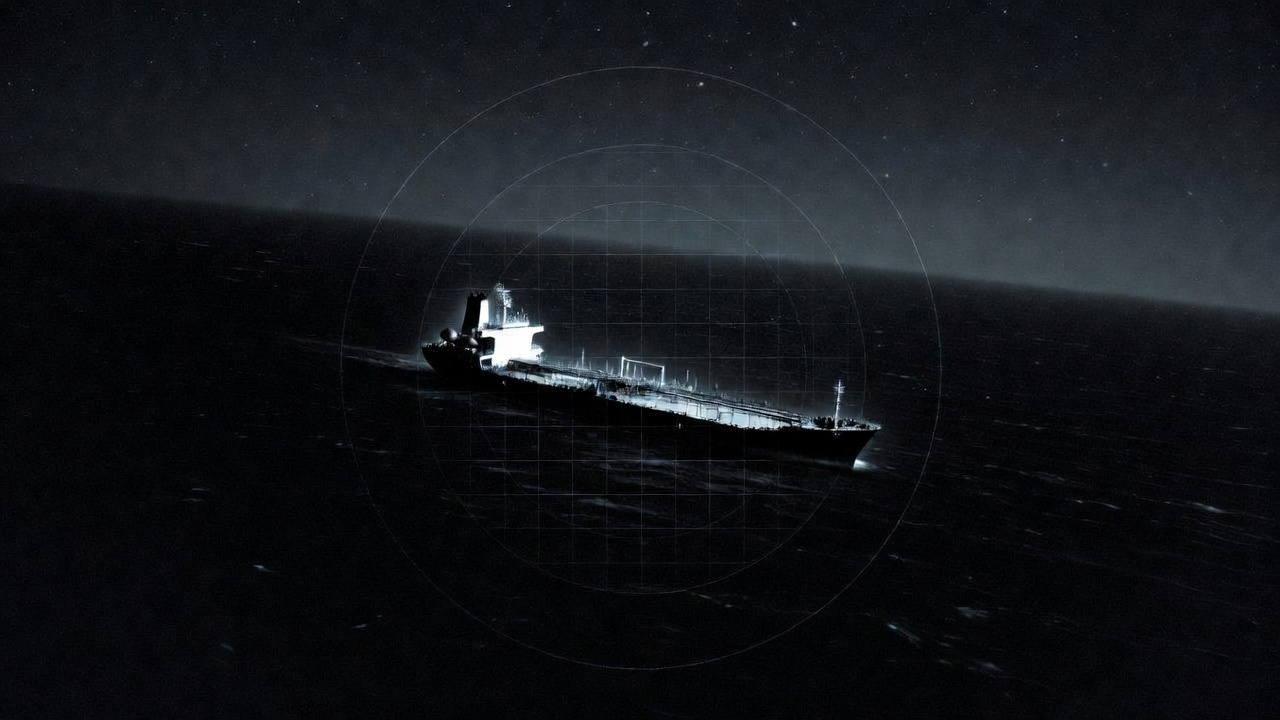
The ships that do not want to be found are getting better at disappearing. In 2026, the so-called dark fleet, vessels that manipulate or disable transponders to evade sanctions, regulatory scrutiny, or trade restrictions, has grown into a structural feature of global maritime commerce, not an aberration. What started as a workaround for a handful of Iranian oil tankers has evolved into a sophisticated, coordinated system of maritime deception used across Russian, Venezuelan, and Chinese shadow trade networks.
The maritime industry response is finally catching up. And the tool doing the catching is AI.
What Legacy Tracking Was Never Built to Handle
Traditional vessel identification systems were designed in an era of cooperative maritime traffic. Ships broadcast their position, speed, heading, and identity. Port authorities, coast guards, and operators could see who was where. The assumption was that everyone was playing by the same rules.
That assumption no longer holds. By early 2026, analysts are tracking a sharp rise in behavioral anomalies: vessels with inconsistent position histories, ships that go dark near key chokepoints and reappear with altered identities, tankers that claim to be in one port while satellite imagery places them elsewhere. Geopolitical fragmentation has accelerated this trend. With the Strait of Hormuz severely constrained and Suez Canal traffic disrupted, Cape of Good Hope rerouting has become the new normal for compliant operators, while sanctioned fleets exploit the chaos.
Position broadcast data alone cannot solve this. It was never designed to. What it can do is serve as one layer in a multi-source intelligence fusion system that catches vessels where their deception breaks down.
How AI Is Closing the Detection Gap
The shift in maritime surveillance is architectural. Modern AI driven platforms are not simply faster at processing vessel feeds. They are fusing fundamentally different data sources into a coherent operational picture.
Satellite imagery, including synthetic aperture radar and LIDAR, can detect vessel presence regardless of whether transponders are transmitting. Radio frequency detection captures signals that standard receivers miss. Behavioral analytics layers on top: models trained on historical vessel behavior can flag when a ship's movements are inconsistent with its declared purpose, even when its identifiers appear legitimate.
The models doing this work, LSTM networks, autoencoders, deep learning architectures trained on multi-year voyage datasets, can identify subtle patterns that no human analyst could detect at scale. A vessel that makes unusual anchorage stops, conducts ship-to-ship transfers in waters not associated with its cargo type, or shows systematic position data inconsistencies will trigger anomaly flags long before a traditional rule-based system would catch it.
Behavioral risk scoring, the practice of assigning probability-weighted risk ratings to individual ships based on their pattern history, is replacing binary blacklist-based approaches.
The Geopolitical Pressure Driving Demand
This is not abstract technology development. It is a direct response to a geopolitical environment that made sophisticated maritime deception economically rational for entire national trade systems.
The bifurcation analysts describe in 2026, a US-led Western trade architecture on one side, a China-Russia-Iran-Venezuela axis developing parallel payment and logistics infrastructure on the other, has turned maritime intelligence into a frontline capability. The EU announced new enforcement powers in early 2026 to board and detain suspected dark fleet vessels in Nordic-Baltic waters. The US Navy is piloting AI enabled tools for maritime domain awareness integrated into command-and-control systems. Governments are increasingly contracting commercial intelligence providers for real-time situational awareness they cannot generate internally.
By 2026, sanctions enforcement is targeting not just vessels but refineries, brokers, and insurers connected to sanctioned trade flows. This creates compliance pressure across the entire maritime services ecosystem. The cost of getting it wrong has become severe enough that operators cannot afford to rely on manual compliance checks.
What Real-Time Situational Intelligence Actually Requires
The organizations navigating this environment effectively share a common capability: they have moved from reactive compliance to proactive situational intelligence.
Reactive compliance means checking a vessel against a sanctions list before engaging. Proactive situational intelligence means maintaining a continuously updated behavioral profile on every vessel in your operational area, monitoring for anomalies in real time, receiving automated alerts when something changes, and having the analytical infrastructure to investigate quickly before a situation develops.
This requires sub-second position data from multiple independent sources, not just broadcast transponders. It requires an anomaly detection engine that can process data at scale and surface meaningful signals without overwhelming operators. It requires alert logic calibrated to the specific risk tolerances of the operator. And it requires the ability to share intelligence laterally across operational stakeholders in real time.
This is where fragmented, point-solution approaches to maritime intelligence fail. A vessel tracking tool that does not connect to crew management records, weather intelligence, or supply chain scheduling cannot support the cross-functional decision making that real operational risk requires.
The Platform Question
The maritime technology market in 2026 reflects this reality. Operators are consolidating away from fragmented tool stacks toward integrated platforms that share a common data layer. The demand is for systems where fleet tracking, anomaly detection, weather intelligence, and logistics coordination operate from a unified information model, not siloed databases that require manual reconciliation.
This consolidation pressure is shaping procurement decisions across all five major maritime verticals: oil and gas, offshore wind, ports and terminals, shipping and logistics, and government and defence. Each vertical has different primary use cases, but the underlying requirement is identical: real-time situational intelligence that is actionable, not just visible.
The dark fleet problem crystallizes why this matters. No single data source, no single analytical tool, and no single operational team has the full picture. The vessels operating outside sanctioned boundaries are sophisticated adversaries. Catching them requires an intelligence architecture sophisticated enough to match.